
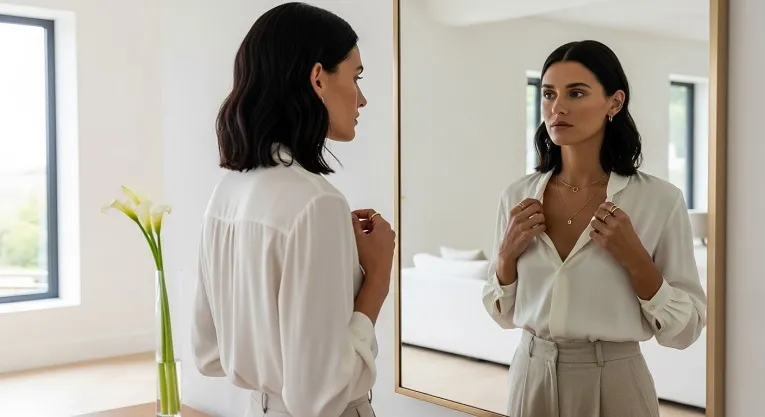
Quick answer: Simple jewellery styles best when you stick to one metal tone, let one piece act as the focal point, and pair it with a plain or neutral outfit. Keeping to one or two pieces at a time and matching warm or cool tones keeps the look intentional rather than random.
Minimal jewellery has become a lasting fashion staple because it enhances an outfit rather than dominating it. A few styling habits make the difference between simple jewellery looking intentional and it looking like an afterthought.
Core Styling Rules
| Rule | Why It Works |
|---|---|
| Stick to one metal tone | Mixing gold and silver randomly can look unplanned rather than intentional. |
| Choose one focal piece | A single standout item, like a necklace or earrings, gives the outfit direction. |
| Balance bold with minimal | Statement earrings pair better with a plain necklace, not another large piece. |
| Match warm or cool tones | Gold suits warmer outfit tones, silver suits cooler ones. |
| Wear it with neutral outfits | Plain colours let simple jewellery stand out naturally. |
A Guide to Metal Tones: Gold, Silver and Rose Gold
Metal tone sets the mood of a simple jewellery look. Gold feels warm and classic, silver feels cool and clean, and rose gold sits between the two with a soft blush tone. Each one suits different skin tones and outfit colours, so it helps to know which one flatters you before you build a collection around it.
| Metal Tone | Character | Suits Best | Pairs Well With |
|---|---|---|---|
| Gold | Warm, rich and classic | Warm skin tones, olive and golden undertones | Warm neutrals, cream, camel, olive and burgundy |
| Silver | Cool, bright and clean | Cool skin tones, pink and blue undertones | Cool neutrals, navy, grey, black and white |
| Rose gold | Soft, warm and romantic | Neutral and warm skin tones, fair and medium skin | Blush, cream, grey and soft pastels |
How to Find the Tone That Suits You
Look at the veins on the inside of your wrist in natural light. Greenish veins usually point to a warm undertone, which suits gold and rose gold. Bluish veins usually point to a cool undertone, which suits silver. If you see a mix of both, you likely have a neutral undertone, and all three tones can work for you. Another quick test is to hold a gold piece and a silver piece against your face in turn and see which one makes your skin look brighter rather than washed out.
Mixing Metals on Purpose
The core rules above suggest sticking to one tone for everyday ease, and that remains the simplest approach. Mixing can still work when it looks deliberate rather than accidental. Choose one dominant tone, then add a single accent piece in the second tone, such as a silver ring worn with an otherwise gold look. Keep the pieces similar in style and weight, so a fine gold chain sits comfortably beside a fine silver chain rather than beside a chunky silver cuff. A two tone watch or a piece that already combines two metals can tie a mixed look together and make the combination look planned.
Necklace Lengths and How to Layer Them
Necklace length changes where a piece sits and how it works with an outfit. Layering works best when each chain sits at a different length, with a clear gap between them, so the pieces read as separate layers rather than one tangled line.
| Length Name | Typical Length | Where It Sits | Layering Role |
|---|---|---|---|
| Choker | 35 to 40 cm | High on the neck | Top layer, pairs with a longer pendant |
| Princess | 45 to 50 cm | At the collarbone | Middle layer, the most versatile everyday length |
| Matinee | 50 to 60 cm | Just below the collarbone, above the bust | Bottom layer in a three piece stack, or worn alone |
| Opera | 70 to 90 cm | Below the bust | Long single statement, or doubled up for a layered look |
Three Layering Combinations That Work
- Choker plus princess: a short chain with a fine pendant at the collarbone. Keep both delicate so the pendant stays the focal point.
- Princess plus matinee: two chains with a gap of at least 5 cm between them, so they do not tangle. Add a small charm to the longer chain for interest.
- Choker plus princess plus matinee: three fine chains at clearly different lengths. Keep one piece plain, so the stack stays simple rather than busy.
Prevent tangling by choosing chains of different weights, with the heavier chain at the bottom, and by fastening each chain before you put it on. A necklace layering clasp, which holds several chains at set lengths, also helps if you layer often. Remove layered necklaces one at a time and store each one flat or hanging, rather than dropping them together into a box.
Layering Without Clutter
Thin necklaces layered at slightly different lengths, or two or three minimal rings stacked together, can add subtle depth without looking busy. The key is keeping every piece delicate, since one bulkier item in the mix tends to throw off the balance of an otherwise minimal look.
Three Outfit Pairings
- Casual everyday: plain t-shirt, jeans, and minimal gold studs or a thin chain.
- Office wear: structured outfit with small hoops or a delicate pendant necklace.
- Evening out: fitted outfit with layered delicate necklaces for subtle detail.
Matching Simple Jewellery to Your Neckline
A necklace should follow the shape of the neckline, not fight it. The right pairing makes both the outfit and the jewellery look intentional, while the wrong pairing can hide the necklace or make the outfit look cluttered.
| Neckline | Best Necklace Choice | What to Avoid |
|---|---|---|
| Crew neck | Princess length pendant that sits just above the neckline | Long chains that disappear under the fabric |
| V neck | Pendant that mirrors the V shape and sits inside the opening | Chokers that close off the V |
| Strapless or off shoulder | Choker or short princess length, with stud earrings | Long necklaces that pull the eye downwards |
| High neck or polo neck | Long matinee or opera length worn over the top | Short necklaces hidden by the collar |
| Button down shirt | Fine pendant worn under an open collar, or a choker with the top button undone | Bulky pendants that catch on the buttons |
Earrings follow a simpler rule. Studs and small hoops suit almost every neckline and keep the focus on the necklace. Longer drop earrings suit plain necklines such as a crew neck or a strapless top, where they have space to show. If the necklace is the focal piece, keep the earrings quiet, and if the earrings are the focal piece, keep the necklace fine and plain.
Common Mistakes
- Wearing too many pieces at once, which dilutes the impact of each one.
- Mixing metal tones without a clear reason.
- Choosing jewellery that does not suit the outfit’s formality.
Expert Insight
Stylists often point out that restraint reads as intention, while over-accessorising can be more distracting than wearing nothing at all. A well-chosen pair of earrings or a fine necklace can finish a look more effectively than five pieces competing for attention.
Frequently Asked Questions
What jewellery goes with almost everything? Thin chains, small hoops, and minimal rings in one consistent metal tone are the most versatile starting pieces.
Is it fine to mix gold and silver? It can work, but it takes a more deliberate approach, such as one dominant tone with a single accent piece in the other. Sticking to one tone is simpler for everyday styling.
More Questions About Styling Simple Jewellery
What is the best first piece of simple jewellery to buy?
Start with a fine chain in your best metal tone, at princess length, plus a pair of small studs or hoops in the same tone. Those two pieces suit almost every outfit and give you a base to add rings or a bracelet to later.
How many rings can I stack without looking overdone?
Two or three fine rings on one hand usually looks balanced, especially when they share one metal tone. Spread them across fingers rather than stacking them all on one finger, and leave at least one hand mostly bare so the look stays simple.
Can simple jewellery work for a formal occasion?
Yes, if you choose the right pieces. A fine pendant, small studs and one slim bracelet suit formal outfits well, since they add polish without competing with the outfit. Save layered stacks and mixed metals for casual days, and keep the formal look to one metal tone.
For choosing pieces that hold up well, see our guide to affordable jewellery that looks expensive. Once your collection grows, our guide to a wooden jewellery box covers how to store pieces properly.
About the Author: This guide was written by Ellen Stevens, Founder & Editor at Fashion Effects, who researches jewellery styling and care to help readers build a wardrobe that feels effortless.