
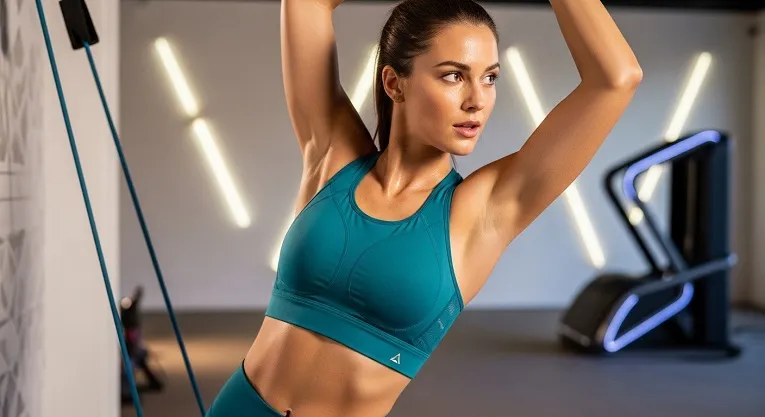
Quick answer: The right sports bra depends on impact level, not brand. Low-impact activities like yoga need light compression, medium-impact activities like cycling need a mix of compression and encapsulation, and high-impact activities like running need maximum encapsulation support with wide, non-stretch bands.
Sports bras have moved well beyond a single style fits all approach, with most activewear brands now building ranges around impact level, fabric technology, and fit rather than one universal design. Here is how to choose the right one for your workout.
Choosing by Impact Level
| Activity Type | Support Needed | Look For |
|---|---|---|
| Low impact (yoga, Pilates, walking) | Light compression | Soft, seamless fabric, wide comfortable straps |
| Medium impact (cycling, dance, strength training) | Moderate compression or light encapsulation | Adjustable straps, breathable mesh panels |
| High impact (running, HIIT, court sports) | Maximum encapsulation | Individual cup support, wide non-stretch band, racerback design |
Compression vs Encapsulation
Compression bras work by pressing the chest against the body, which suits smaller busts and lower-impact movement. Encapsulation bras support each side individually with dedicated cups, similar to a regular bra, and generally offer better support for larger busts or high-impact movement. Many high-support sports bras now combine both approaches for maximum stability.
Fabric and Fit Features That Matter
- Moisture-wicking fabric: pulls sweat away from the skin to reduce chafing during longer sessions.
- Breathable mesh panels: placed at high-sweat areas like the underarms and upper back to improve airflow.
- Wide, adjustable straps: distribute weight more evenly across the shoulders than thin straps.
- Flat or bonded seams: reduce chafing and irritation, particularly under tighter tops.
Getting the Right Size
A properly fitted sports bra should feel snug without digging in, with the band staying level all the way round rather than riding up at the back. If straps are constantly slipping or the band feels loose after a few wears, it is usually a sign to size down the band rather than the cup. Most retailers offer in-store or online sizing guides, and trying a bra while moving, not just standing still, is the most reliable way to check fit.
Caring for a Sports Bra
- Wash in cold water with a mild detergent, avoiding fabric softener, which breaks down elastane over time.
- Air dry rather than tumble dry, since heat weakens elastic fibres and straps.
- Rotate between two or three bras rather than wearing one continuously, to let the elastane recover between wears.
Expert Insight
Fitting specialists commonly cite band size, not cup size, as the most frequent fitting mistake, since a stretched-out band undermines even a well-designed cup. Checking and adjusting the band on the loosest hook when new, then tightening as the bra ages, extends the useful life of a sports bra considerably.
Frequently Asked Questions
How often should a sports bra be replaced? Most sports bras last around six to twelve months with regular use, depending on frequency of wear and care. Stretched straps, a loose band, or visibly worn fabric are signs it is time for a replacement.
Can a sports bra be worn for everyday use? Lower support styles are often comfortable enough for all-day wear, though high-support, high-impact bras can feel restrictive outside of exercise.
For more activewear guidance, see our gym set colour guide covering navy, sage green, khaki, butter yellow, and pink.
About the Author: This guide was written by Ellen Stevens, Founder & Editor at Fashion Effects, who researches activewear fit and fabric technology to help readers choose gear that actually works for their workout.