
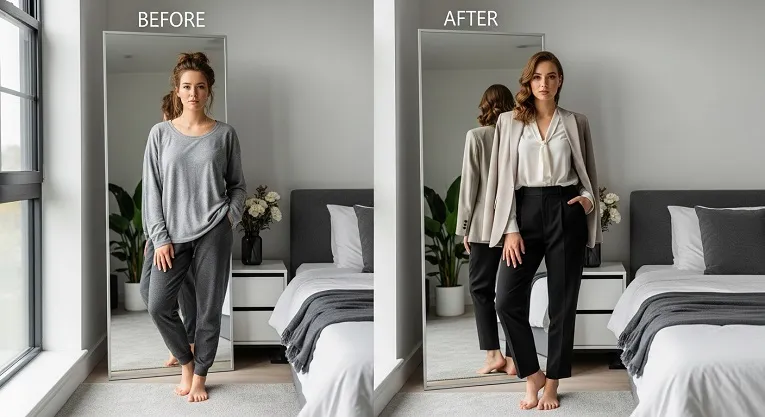
How Clothes Affect Confidence
Your clothing has a direct impact on how you feel, think, and behave. What you wear influences your self-perception, affects how others respond to you, and can instantly shift your mood and confidence levels.
Here’s why it matters:
- Clothes shape how you see yourself
- They influence first impressions
- They affect body language and behavior
- They can boost or reduce confidence instantly
Understanding how clothes affect confidence allows you to take control of your appearance and use it as a tool to feel more self-assured every day.
The Psychology Behind Clothing and Confidence
What Is Enclothed Cognition
Enclothed cognition is a psychological concept that explains how your clothing influences your mental state. It’s not just about how you look, but how your brain interprets what you’re wearing.
For example, wearing structured or formal clothing can make you feel more focused and capable, while relaxed outfits may make you feel calm but less driven.
How Clothes Influence Your Brain
Your brain associates clothing with meaning. A blazer might signal professionalism, while gym wear signals activity. These associations trigger changes in confidence and behavior.
This is one of the clearest explanations of how clothes affect confidence in daily life. The shift is often subtle, but powerful enough to change how you carry yourself.
The Link Between Appearance and Self-Esteem
When your outfit aligns with how you want to feel, your confidence increases. On the other hand, wearing something that feels “off” can lower your self-esteem and make you more self-conscious.
This is why people often feel more confident in outfits they’ve carefully chosen rather than something random.
7 Ways Clothes Directly Affect Your Confidence
They Shape First Impressions
People judge appearance within seconds. Wearing well-fitted and intentional outfits helps you present yourself positively, which feeds back into your own confidence.
They Influence Your Body Language
When you feel good in what you’re wearing, you naturally stand taller, make better eye contact, and move with more certainty.
They Affect Your Mood Instantly
Bright, clean, and well-coordinated outfits can elevate your mood. On the other hand, uncomfortable or mismatched clothing can create irritation and distraction.
They Change How Others Treat You
People respond differently based on your appearance. When others treat you with more respect or attention, your confidence increases.
They Reinforce Identity
Your clothing reflects who you are or who you want to become. Dressing in alignment with your identity strengthens your self-image.
They Improve Social Comfort
Feeling appropriately dressed for a situation reduces anxiety and helps you engage more comfortably with others.
They Boost Self-Image
Seeing yourself well-dressed in the mirror reinforces a positive perception, which directly impacts your confidence throughout the day.
What Clothes Make You Feel More Confident
Colors That Boost Confidence
Certain colors are known to influence emotions:
- Black: authority and elegance
- White: clarity and simplicity
- Red: power and attention
- Blue: calm and trust
Wearing colors that match your mood or intention can significantly enhance how you feel.
Well-Fitted vs Loose Clothing
Fit matters more than price or brand.
- Well-fitted clothes highlight your shape and improve posture
- Overly loose or tight clothing can make you feel uncomfortable
A properly fitted outfit instantly makes you look and feel more put together.
Minimal vs Statement Outfits
Minimal outfits create a clean and polished look, while statement pieces can boost confidence by drawing attention.
The key is balance. Choose one standout element rather than overwhelming your outfit.
How to Dress Confidently Every Day (Step-by-Step System)
Step 1: Choose Fit Over Trends
Trendy clothes don’t always suit everyone. Focus on fit first, then style.
Step 2: Build a Go-To Outfit Formula
Having a reliable outfit combination saves time and reduces stress.
Example:
- Fitted jeans
- Neutral top
- Structured jacket
Step 3: Use Colors Strategically
Pick colors that complement your skin tone and match the mood you want to project.
Step 4: Dress for the Occasion
Wearing the right outfit for the situation prevents discomfort and boosts confidence.
Step 5: Keep It Comfortable
Confidence drops quickly if you feel physically uncomfortable. Always prioritize comfort alongside style.
Real-Life Scenarios
Job Interview Outfit Confidence
A structured outfit with neutral tones can make you feel more prepared and capable. This mental shift often improves performance.
First Date Confidence
Outfits that reflect your personality while staying comfortable help you feel more natural and less anxious.
Everyday Casual Confidence
Even simple outfits can boost confidence when they are clean, well-fitted, and thoughtfully styled.
Common Mistakes That Kill Confidence
Avoid these:
- Wearing clothes that don’t fit properly
- Following trends without considering your body type
- Ignoring comfort
- Choosing outfits that don’t match the occasion
These mistakes often explain why people struggle with confidence despite having a full wardrobe.
Quick Confidence Outfit Checklist
Use this before stepping out:
- Does it fit well?
- Is it comfortable?
- Does it match the occasion?
- Do you feel like yourself in it?
If the answer is yes to all, you’re set.
FAQs
Can clothes really change your confidence??
Yes. Clothing influences both your mindset and how others perceive you, which directly impacts confidence.
Why do I feel different in certain outfits
Different clothes trigger different psychological associations, which change how you think and behave.
What should I wear to feel more confident
Wear well-fitted, comfortable clothes in colors that suit you and match the occasion.
Do expensive clothes increase confidence
Not necessarily. Fit, comfort, and personal style matter more than price.
Conclusion: How clothes affect confidence
Understanding how clothes affect confidence gives you a powerful advantage. Instead of guessing what works, you can make intentional choices that improve how you feel every day.
Confidence isn’t just something you develop internally. It’s something you can build externally through small, consistent changes in how you dress.
When you align your clothing with your personality, comfort, and goals, confidence becomes a natural result rather than a struggle.
