
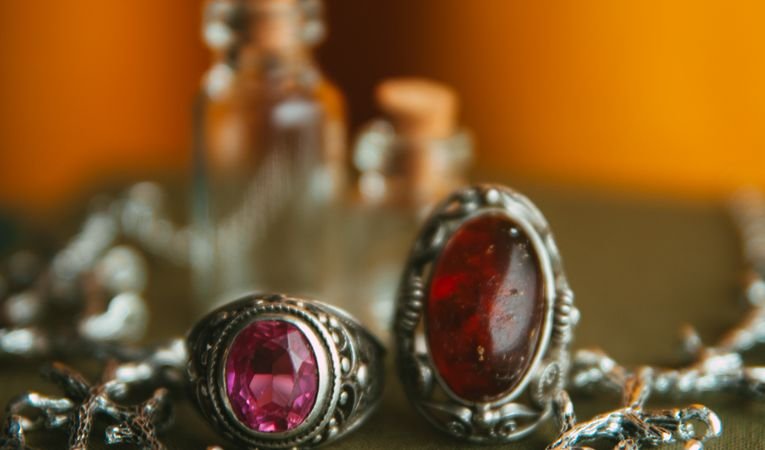
Quick answer: A dedicated silver jewellery cleaner or polishing cloth removes tarnish safely, while an ultrasonic cleaner works well for solid metal pieces without porous gemstones. Avoid ultrasonic cleaning for opal, pearl, and other soft or porous stones.
Silver naturally tarnishes over time as it reacts with air, and while that is completely normal, a good silver jewellery cleaner keeps pieces looking bright rather than dull. Here is how to choose and use one properly, without damaging softer stones or delicate settings.
Types of Silver Jewellery Cleaner
| Cleaning Method | Best For | Avoid For |
|---|---|---|
| Polishing cloth | Light, regular tarnish | Deep set tarnish in detailed pieces |
| Liquid dip cleaner | Solid silver, no gemstones | Porous or soft gemstones |
| Ultrasonic cleaner | Solid metal pieces, chains | Opal, pearl, emerald, and other soft stones |
Why Silver Tarnishes
Tarnish forms when silver reacts with sulphur compounds in the air, creating a dull, sometimes dark film on the surface. Humidity, perfume, and everyday skin oils can all speed up the process, which is why pieces worn less often, or stored without an anti tarnish lining, tend to dull faster than those worn regularly.
Using a Liquid or Dip Cleaner Safely
Dip cleaners work quickly on solid silver, but they are not suitable for every piece. Gemstones, especially softer or porous ones, can be damaged or discoloured by the chemicals involved, so it is worth checking a piece is solid metal, with no stones or plating, before using a dip cleaner on it. A dedicated brand such as Connoisseurs is widely used for this reason, formulated specifically for jewellery rather than general household silver cleaning.
Ultrasonic Cleaners: What to Know
An ultrasonic cleaner uses high frequency sound waves in a liquid solution to lift dirt from tiny crevices, which makes it effective for detailed, solid metal pieces like chains and settings. However, it is not suitable for every gemstone. Softer or porous stones such as opal, pearl, turquoise, and emerald can crack or become cloudy under ultrasonic vibration, so it is worth checking a stone’s suitability before using this method.
Expert Insight
Jewellers generally recommend a simple test before deep cleaning any unfamiliar piece: if you are unsure what a gemstone is, or whether it has been treated or fracture filled, a gentle polishing cloth is a safer starting point than a liquid dip or ultrasonic cleaner, both of which carry more risk for unidentified stones.
Frequently Asked Questions
Can I clean silver jewellery with toothpaste? While sometimes suggested as a home remedy, toothpaste can be too abrasive for polished or detailed silver and may cause fine scratches, so a dedicated jewellery cleaning product is generally the safer choice.
How often should silver jewellery be cleaned? This depends on how often it is worn, but a light clean every few weeks, alongside proper anti tarnish storage, keeps most pieces looking bright.
See our guide to the wooden jewellery box for storage that helps slow tarnishing between cleans. For choosing pieces that hold up well in the first place, see our guide to affordable jewellery that looks expensive.
About the Author: This guide was written by Ellen Stevens, Founder & Editor at Fashion Effects, who researches jewellery care, storage, and materials to keep our style guides accurate and useful.
Tags: Jewellery Care