
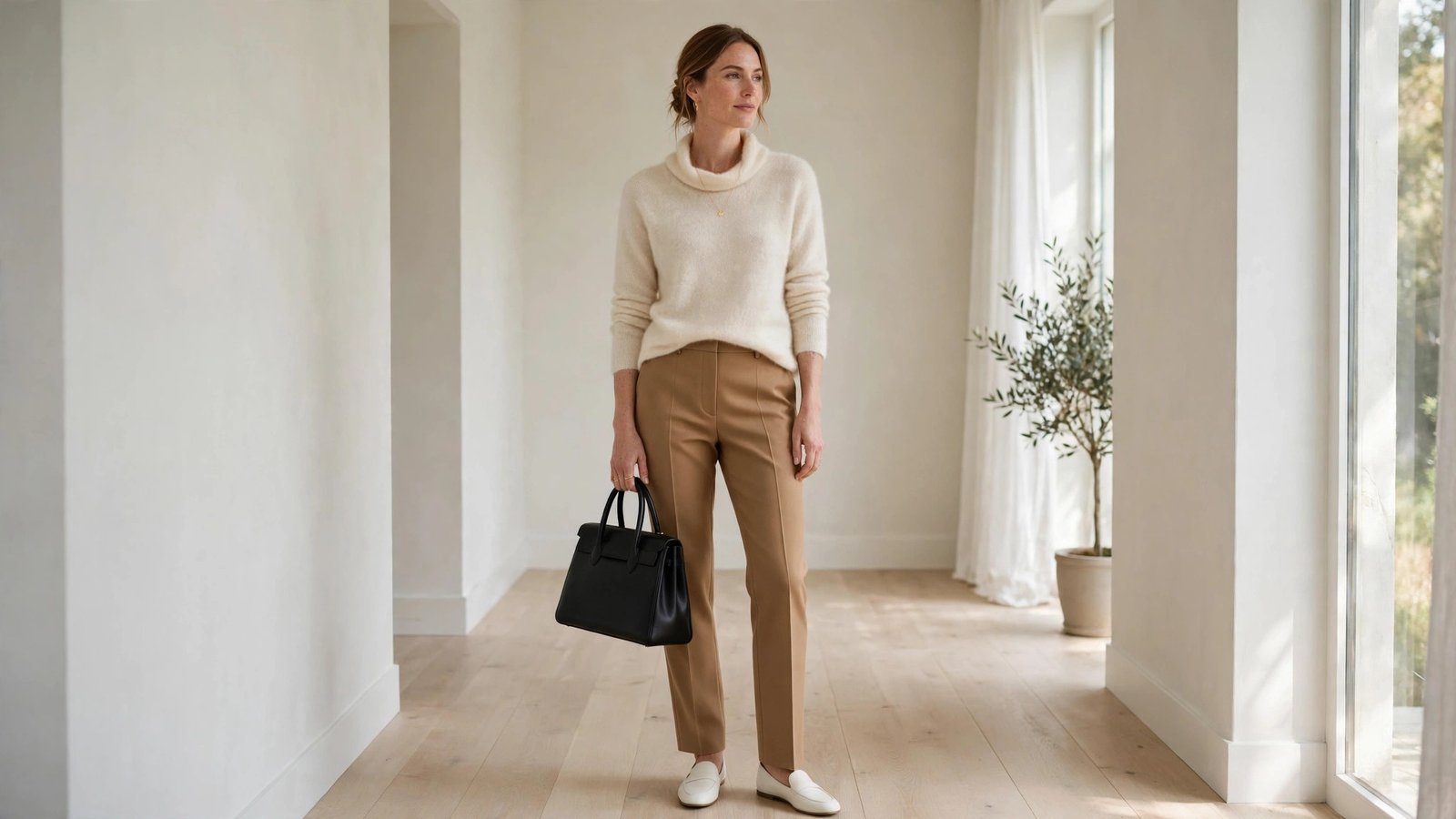
Quick answer: Quiet luxury style in the UK is an understated way of dressing built on neutral colours, clean tailoring and good fabrics. It avoids visible logos and trend-led pieces. Fit and fabric matter more than labels, so the look works on the high street as well as at investment level. This guide covers the colours, fabrics and essentials to choose, and how to build the look on a UK budget.
Quiet luxury has become one of the most talked about looks in UK fashion. It appears in magazine shoots, on social media and in high street windows. Yet many guides describe it in vague terms and rarely explain how an ordinary reader can build it.
This guide takes a practical approach. It explains where to spend and where to save, and the mistakes that make an outfit look plain rather than polished. Everything here is written for UK readers, with UK shops, UK seasons and UK weather in mind.
What Is Quiet Luxury?
Quiet luxury is a style built on restraint. It favours simple shapes, muted colours and fabrics that look and feel good, and it avoids large logos, loud prints and anything that shouts for attention. The point is to look considered, not expensive.
The look takes its cues from classic tailoring. A well cut coat, a good knit and clean leather shoes do most of the work. Nothing in the outfit competes for attention. Each piece supports the rest.
Quiet luxury is also a mindset. It asks you to buy less and choose better. A smaller wardrobe of well made pieces lasts longer and works harder than a rail full of trend items.
The look belongs to a family of named aesthetics. Our complete guide to fashion aesthetics explains how quiet luxury sits beside other styles, from French girl style to dark academia, so you can see which one fits you best.
What Quiet Luxury Is Not
Quiet luxury is often misunderstood. It is not simply expensive clothing. A high price does not make an outfit quiet luxury, and a modest budget does not rule it out. The look is about choices, not labels.
It is not strict minimalism. Minimalist dressing often means very few pieces and very little colour. Quiet luxury allows warmth, texture and personality. A camel coat, a silk scarf or a gold chain can all belong, as long as they stay understated.
It is not the same as old money style either. Old money dressing draws on a specific social history. Quiet luxury borrows some of the same pieces, but it does not try to signal a background or a class. It is a style choice, open to anyone.
The Quiet Luxury Colour Palette
Colour is the first thing people notice, so the palette matters. Quiet luxury relies on neutrals. Cream, ivory, camel, taupe, grey, navy and black form the core. These colours work together easily, which makes outfit building simpler.
Start with three neutrals that suit you. Cream and camel warm up a wardrobe. Grey and navy cool it down. Black adds structure. Once you have your three, add one soft accent for variety, such as sage, soft blue or dusty rose. Keep the accent muted. A quiet version of a colour reads as luxury, while a bright version reads as a statement.
Wear neutrals in layers rather than in one flat block. A cream knit over camel trousers looks richer than a single cream outfit, and a navy coat over grey trousers adds depth. The contrast between tones creates the interest that prints would otherwise provide.
Check colours in daylight before you buy, as shop lighting can flatter a shade that looks dull at home. Hold the fabric near your face. If it lifts your skin, it belongs in your palette.
Fabrics That Carry the Look
Fabric is where quiet luxury succeeds or fails. The look depends on materials that hold their shape and look good after repeated wear. Cheap, shiny or thin fabrics undo the effect, however good the cut.
Cashmere, merino wool, silk, linen and good quality cotton are the main fabrics to look for. Cashmere and merino suit knitwear. Silk works for blouses and scarves. Linen suits summer, though it creases, so choose a linen blend if you dislike that. Cotton works for shirts and simple dresses when the weave is tight and the fabric has some weight.
Learn to feel fabric before you buy. Hold it up to the light. A good fabric has an even weave and a slight weight, and it drapes rather than clinging or standing stiff. Check the label. A high share of natural fibre usually means better drape and longer life, though a little elastane can help a garment keep its shape.
Care matters as much as choice. Wash knitwear gently, dry it flat and store coats on proper hangers. A well cared for jumper looks better after two years than a neglected one looks after two months.
Quiet Luxury Wardrobe Essentials
You do not need a full new wardrobe to dress in this style. A small set of essentials covers most occasions, so build slowly, one piece at a time, and choose each one with care.
- A tailored coat in camel or navy. Choose a length that suits your height and a shape that fits over knitwear.
- A cream or ivory knit. A roll neck or crew neck in cashmere or merino wool works with trousers, skirts and jeans.
- Tailored trousers in a neutral shade. Camel, grey or navy trousers with a clean front and a straight leg suit most body shapes.
- A white or cream shirt. Choose cotton with a tight weave.
- A simple silk or satin blouse. This adds softness for evenings and for work, without a print or a logo.
- A straight midi skirt or a simple shift dress. Pick a neutral colour and a clean line.
- Clean leather shoes. Loafers, simple court shoes or plain ankle boots in black, tan or navy finish the look.
- A structured bag in a neutral colour. A bag that holds its shape looks more polished than a soft, slouchy one.
- Simple gold or silver jewellery. A fine chain, small studs and a plain ring add polish without drawing attention.
Buy the coat and the knit first. They are the most visible pieces in the UK climate.
Tailoring: The Detail That Makes It Work
Tailoring is the detail most guides skip. A garment that fits well looks expensive. One that does not fit looks careless, whatever it cost.
Pay attention to shoulders, sleeves and hems. A blazer shoulder should sit at your own shoulder, not beyond it. Sleeves should end at the wrist bone. Trousers should break once at the shoe. A skirt should hang straight without pulling at the hips.
Consider a tailor for key pieces. Shortening a sleeve, taking in a waist or hemming a trouser costs far less than a new garment, and it changes how the whole outfit looks. A good alteration can rescue a high street piece.
Try clothes on with the shoes you will wear with them. A blazer that fits over a T-shirt may pull over a knit, and a trouser that fits in heels may drag in flats. Test the full outfit, not just the single piece.
High Street vs Investment Pieces
Quiet luxury works at every budget, but the smart move is to split your spending. Buy some pieces on the high street and invest in others. The table below shows where each approach works best.
| Piece | High street | Investment |
|---|---|---|
| Coat | Fine for one season | Best choice, lasts for years |
| Knitwear | Good in cotton or merino blends | Best choice for cashmere |
| Shirts and blouses | Good, easy to replace | Only if the fabric is silk |
| Trousers | Good, if the fit is right | Worth it for wool tailoring |
| Shoes | Fine for a single season | Best choice, leather lasts longer |
| Handbag | Good in a simple shape | Best choice for daily use |
| Jewellery | Good for simple plated pieces | Best choice for solid gold or silver |
The rule is simple. Invest in the pieces you wear most: your coat, your shoes and your everyday bag. Save on pieces that change often, such as shirts and simple tops.
On the high street, look for natural fibres and clean finishes. Check seams, linings and buttons. A lined coat and a well sewn hem signal better quality. Avoid garments with loose threads or plastic-feeling fabric.
For investment pieces, take your time. Wear the piece around the house before you remove the tags. It should still feel right after a full day, not just in the shop mirror.
How to Build a Quiet Luxury Outfit
Start with one neutral base, then add one layer and one texture. That simple formula works for most days.
- Choose your base. Pick tailored trousers or a simple skirt in a neutral shade. This is the foundation of the outfit.
- Add a knit or a shirt. A cream knit or a white shirt in a good fabric lifts the base.
- Layer a coat or a blazer. The outer layer frames the outfit. A camel coat or a navy blazer both work.
- Add one texture. Silk, suede or a soft knit adds interest, but two textures can compete.
- Finish with simple shoes and one piece of jewellery, such as clean loafers and a fine gold chain.
Before you leave the house, check the outfit in a full length mirror. If one piece dominates, swap it for something quieter. If the outfit feels flat, add texture rather than colour.
A wardrobe confidence audit helps here. It shows you which pieces you already own that fit the look, so you can build from your wardrobe before you buy anything new.
Quiet Luxury Jewellery and Accessories
Accessories make or break a quiet luxury outfit. The rule is restraint. One or two simple pieces beat a stack of competing ones.
Choose fine jewellery over chunky statement pieces. A thin gold chain, small hoop earrings or a plain band ring all suit the look. Match your metals, as gold with gold and silver with silver looks more considered than a mix.
Keep your bag structured and your shoes clean. A structured bag in black, tan or navy works with almost every quiet luxury outfit. Scuffed shoes undo the polish of an otherwise careful outfit.
A silk scarf adds a soft accent without breaking the palette. Wear it at the neck or tied to a bag handle, in a muted tone that echoes a colour already in your outfit.
Quiet Luxury on a Budget in the UK
You can build this look without a large budget. The key is to buy slowly and to choose each piece with care.
Start with what you already own. Most wardrobes contain at least one neutral knit, one pair of dark trousers and one plain coat. Wear those pieces together first, then add one new piece at a time, starting with the item that will get the most wear.
Shop the high street for shirts, simple tops and knitwear in cotton or merino blends. Look for sales on coats and shoes at the end of the season. Check charity shops too, where good quality coats and knitwear often appear in excellent condition.
Avoid buying a full quiet luxury wardrobe in one trip. A wardrobe built in a day rarely fits well and often includes pieces you do not need. One good piece per month builds a better wardrobe than ten rushed buys.
Mistakes to Avoid
The most common mistake is confusing quiet luxury with expensive labels. A visible designer logo breaks the look at once, so if a bag or a belt carries a large logo, it does not belong in this style.
The second mistake is wearing only one colour from head to toe in the same tone. A single cream outfit can look washed out, so mix tones within the same family, such as cream with camel or grey with navy.
The third mistake is ignoring fit. Oversized pieces can look relaxed, but only when the shape is deliberate. A blazer that is simply too big looks borrowed, not effortless.
The fourth mistake is over-accessorising. Three necklaces, two bracelets and large earrings compete with each other, so choose one focal piece and let the rest stay quiet.
Frequently Asked Questions
What is quiet luxury style?
Quiet luxury is an understated style built on neutral colours, clean tailoring and good fabrics. It avoids visible logos and trend-led pieces. The focus is on fit, fabric and proportion rather than on brands.
Can you dress quiet luxury on a high street budget?
Yes. The look depends on colour, fit and fabric, not on labels. Spend more on your coat and your shoes, and save on shirts and simple tops.
What colours are quiet luxury?
The core colours are cream, ivory, camel, taupe, grey, navy and black. These neutrals mix easily and suit most skin tones. Add one soft muted accent, such as sage, soft blue or dusty rose, for variety.
Is quiet luxury the same as minimalism?
No. Minimalism often means very few pieces and very little colour. Quiet luxury allows warmth, texture and personality, so a camel coat, a silk scarf or a gold chain can all belong, as long as they stay understated.
What should I buy first for a quiet luxury wardrobe?
Start with a tailored coat in camel or navy and a cream knit in cashmere or merino wool. These are the most visible pieces in the UK climate. Add tailored trousers in a neutral shade next, then a white shirt and clean leather shoes.
Conclusion
Quiet luxury is not about money. It is about choosing well, fitting well and keeping things simple. A neutral palette, good fabrics and clean tailoring do most of the work, and a structured bag, simple jewellery and clean shoes finish it.
Start with what you own and add one good piece at a time. Check the fit, care for the fabric and keep the logos out of sight. The result is a wardrobe that looks polished every day, in every season, without ever trying too hard.